

Let’s go through the market simplifications first.
Middle East is still a mess. However in our WW III is for weekends, so as not to topple the globalist financial empire, we should have some upward bias to markets. However…
Last week’s Jobs data was on the skimpy side. So, our back-of-the-envelope says odds shade toward “buy the rumor” (today and tomorrow) bias. Which means a lower (release of energy) when the CPI comes in a bit hot on Wednesday.
Futures are softly pricing this with gold and silver prices remaining robust. We continue a personal focus on increasing local (on-property) food production capacity for late this year and next.
News Compressor: ON
Our AI army has produced the morning “Farm House Briefing for the Residents.”
Scan time: Monday, August 10, 2026, 5:00 a.m. CDT Baseline: August 9 morning rerun; 45 unique, deduplicated story clusters screened; four ranked higher.
“What has changed is that commercial carriers are beginning to return additional container services to the Red Sea/Suez route even while Houthi attacks have resumed nearby. — Better than expected. Maersk and Hapag-Lloyd said another Gemini-network service will resume Suez transits, a significant operational reversal from Cape-of-Good-Hope routing and a potentially direct reduction in Asia-Europe and some U.S.-bound freight time and cost. We expect – once the market opens today – the commercials will let the markets rise.
The second change is that the American jalapeño-salmonella incident has expanded from restaurant ingredients into a retail prepared-food recall. — Escalating. Taylor Farms recalled salsa and guacamole containing peppers from Coast Citrus Distributors; the underlying outbreak has sickened 345 people in 27 states and hospitalized 36, although no illnesses were yet linked specifically to the newly recalled prepared products.
The third material shift is that markets are treating the Hormuz crisis as containable even though physical traffic has not normalized. Japan’s Nikkei gained 2.1%, Brent traded around $83–$84, and September Fed-hike odds fell to roughly 44%–45%.
The fourth development is that Apple is reportedly testing Chinese CXMT memory chips across iPhones and MacBooks as the AI buildout tightens global memory supply. — New. Reuters could not independently verify the Wall Street Journal report, but HP and Acer are already reported to be using CXMT components outside the United States, making the shortage a potential accelerant of Chinese semiconductor penetration.
Inside Pages
Think of those stories as “front and back paper” of a legacy style newspaper. Now we dig in…
1. Iran says its Oman shipping-lane deal is nearing completion but still will not reopen Hormuz by itself. This may moderate long-term market risk (and price inflation) but don’t hold your breath – yet.
2. New — Treasury Secretary Scott Bessent says Hormuz may eventually become “irrelevant” to U.S. energy security. We call that happy talk – and front-running the facts.
3. Iran says it does not view the new Saudi-Turkish-Pakistani security pact as inherently directed against Tehran. Still, it’s a “nuclear swing force” with Pakistan in possession of 170 warheads (2025 est.).
4. Confirmed — Netanyahu continues to reject the sequencing in Trump’s 15-point Gaza roadmap. Benj has an election looming and we would not be surprised by a first-use against Iran.
5. The Belgorod drone-attack death toll rose to six. Russian authorities also reported 25 injuries and said more than 150 Ukrainian drones were intercepted across Russian-controlled territory; these remain Russian-government casualty and interception claims. We expect Vlad Putin has a “do not cross” number which will trigger an EU invasion. Not before lunch.
6. Better than expected — Black Sea civilian shipping through the Turkish straits remains open. Ankara denied reports of a broad commercial restriction, although temporary security measures remain and Turkey is urging Russia and Ukraine to stop attacking shipping.
7. New — Russia is preparing roughly $122 million to reroute agricultural exports by rail. The plan pivots cargo away from Sea of Azov constraints toward Black Sea, Baltic and Far Eastern ports, Harder for Ukraine to hit.
8. July U.S. container imports reached 2.5 million TEU, the fourth-highest July on record. Globalist job-jacks to Asia keep working out – just not for us.
9. China is effectively balancing Asia’s oil shortage by consuming its own inventories. June-July Chinese crude imports averaged 7.78 million barrels per day, 4.21 million below the prewar average, roughly matching the regional Middle East supply shortfall.
10. Better than expected — Reuters says S&P 500 earnings were up about 30% year over year excluding investment gains at Alphabet and Amazon, with a 76% earnings-beat rate matching the strongest since 2021. NFIB survey tomorrow.
11. Newly scheduled — Friday retail-sales data will test whether the jobs weakness has reached household demand.
12. Worse than expected — British Columbia has confirmed at least one fatality in its wildfire emergency. 20,000 people remained displaced around Okanagan Lake. South of there, reader d’Lynn shared this view of the “Little Giant fire” near Lake Chelan.
13. Better than expected — Spokane’s three major fires were no longer spreading Sunday. Damage estimates have nevertheless risen to roughly 920 structures.
14. Unchanged but consequential — Congo’s Bundibugyo Ebola outbreak remains a U.S. screening issue as CDC continues enhanced entry screening for travelers from affected countries.
15. Todd Blanche has been confirmed attorney general by a 50–49 Senate vote. See? They can work weekends and do things (when it’s in their self-interest!
16. Escalating — China’s semiconductor supply chain is taking over: Apple’s reported CXMT testing follows existing adoption by HP and Acer and illustrates how AI-driven memory shortages can weaken sourcing barriers faster than policy can reinforce them.
12–96 Hour News Forecast
Mostly fair to partly alarmist with clouds over the Middle East.
U.S. CPI reshapes September Fed odds — next 48–72 hours — 93%.
The odds of an Oman-Iran shipping framework are running — next 12–72 hours — around 74%.
Retail recall scope expands — next 12–72 hours — 72%. (What will we do with all the tortilla chips now???).
Pacific Northwest fire operations still hard-pressed. But son G2’s server farm build in Cent. WA is planning to go back to work, last we heard. AQI in Wenatchee of 25 early today – huge improvement – and likely more breathable up toward d’Lynn’s home (Chelan) – look for a report in Comments.
Up and Coming Signals
The global shipping system is bifurcating rather than simply reopening — 92%.
AI demand is now reshaping geopolitical semiconductor sourcing — 90%.
China is functioning as the shock absorber for Asia’s oil shortage — 93%.
The U.S. holiday inventory cycle is becoming a tariff-timing cycle — 87%. Near-record July container volume alongside forecasts for weaker later imports implies companies are increasingly moving goods according to policy deadlines rather than ordinary seasonal demand.
At the Ranch: Brewster, MWI, Dreams
We usually don’t share Peoplenomics level work publicly, but this weekend’s work was particularly interesting and offers a great deal to think about.
Brewster Angle Dreams
Why the Physics of Sleep May Be an Offset View of the Many Worlds Interpretation of Quantum Mechanics
(c) 2026 George A. Ure Peoplenomics.com – Open Research – August 2026
Abstract
Human consciousness operates through a single focal point. In our waking state that focal point remains locked onto one continuous worldline. Conventional physics has treated this lock as complete and permanent. Our research hints that it is not.
When the waking mind relaxes into sleep, the integrating instrument (consciousness) is no longer fully online.
Remember that at all times, the Many-Worlds Interpretation (MWI) of quantum mechanics suggests that nearby branches continue to evolve (e.g. throwing off new worldlines) without users experiencing the usual continuous integration by a single (wakened) observer.
Dreams may therefore constitute periods in which consciousness temporarily samples an offset branch—an adjacent but non-contiguous domain. In many aspects, this also solves our metaphysical bi-location, as well. However that’d be another paper, not this one.
Here, we tightly focus on the MWI worldline splits and look for existing templates in well-understood physics.
The optical principle known as the Brewster angle supplies a clean, portable analogy. In a ruby laser, light striking a dielectric interface at a precise angle experiences zero reflection for one polarization and is fully transmitted. The same geometry that once made early ruby rods lase may describe how consciousness, when “angled” away from its primary worldline, transceives into another domain rather than remaining reflected wholly within the familiar (waking) one.
Altered dream physics—that you may have personally encountered in your own dreams, may at times include variable gravity, effortless flight, intensified color, fluid causality—then become expected consequences of observing a neighboring domain from an offset angle rather than anomalies to be dismissed on return to waking.
The human mind remains a single instrument with no independent cross-check. That architectural fact makes the dream offset both possible yet invisible to ordinary waking measurement.
1. The Single Focal Point
Every pilot is taught a basic rule of instrumentation: never trust a single gauge without a cross-check. Redundant systems exist precisely because sensors can lie.
Consciousness has no such redundancy. We experience the world, and our own continuity, through one integrated focal point. There is no second observer inside the skull that can independently verify whether the stream of experience is still locked to the same worldline.
In the waking state this single-instrument limitation is rarely noticed. The continuity of memory, the consistency of physical law, and the social consensus of other observers all reinforce the impression that the focal point is permanently fixed.
Sleep removes those reinforcements.
This is not to suggest that in sleep, “seeding effects” don’t matter. Demonstrably, they do. Day-Residual and phenomenology such as under-integrated “thought stubs” are likely pre-processes, as I proposed in my paper “Charged Body Theory.”
Arising from that work is a human brainscape differentiated by information flow rates. The highest is linkage to waking from the Ontology itself. Waking acts as a “buffer before action” state. Dreams – in this context – may be proposed as “preprocessing”: prior to the next slower level – which, if you hadn’t guessed – is the electro-chemical-blood layer. Which in my research begins to appear more an archival layer for use at/after time of death as a playback mechanism for “recorded life”.
Which then extends to another (longer) paper correlating Near Death Experience, Life Review, and “judgment days” in many religious disciplines. But, I digress.
2. The Ruby Rod and the Angle That Changes Everything
In 1966, in the basement of the University of Washington’s electrical-engineering building, a young experimenter first encountered the practical reality of the Brewster angle.
A ruby rod was ground so that one end face sat at a precise angle relative to the rod axis. That face was then partially silvered. When the rod was side-pumped with intense light, the geometry mattered decisively. At ordinary angles a fraction of the light reflected uselessly from the surface. At Brewster’s angle, for the preferred polarization, reflection dropped essentially to zero. The light was transmitted into the cavity, the threshold for oscillation was lowered, and the rod lased into coherence—lasing.
Brewster’s angle is defined simply:
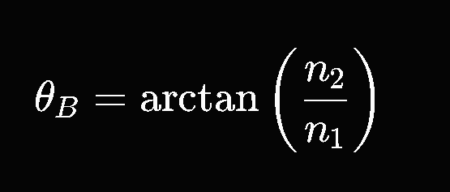
where and are the refractive indices on either side of the interface. At that angle the Fresnel reflection coefficient for p-polarized light becomes zero. The interface ceases to act as a mirror and becomes a window.
Importantly, ?c is a state-angle, not a literal spatial angle like Brewster’s optical angle: ?c = degree of observer-state offset from normal waking integration.
The principle is portable. Any system that can be described as an interface between two domains can, under the right orientation, change from reflective isolation to transmission.
This frame opens, by implication, the idea that the MWI worldline separation may have a critical state-angle (which I think of in terms of a “take-off angle” riffing on the physicality of Brewster) which then offers insight into frequency and information transmissibilities between temporal domains (worldlines).
3. Sleep as a Change of Angle
Waking consciousness may be regarded as observation at normal incidence: the mental focal point remains aligned with one continuous worldline. Reflection (integration, continuity, causal consistency) is high. The observer remains inside the familiar domain.
In sleep the integrating instrument is partially offline. The strict alignment that keeps experience locked to a single branch relaxes. In MWI terms, nearby branches that have already diverged continue to evolve. When the residual awareness of the dreamer remains “adjacent” to one of those branches—close enough in configuration space that some residual coupling still exists—consciousness can find itself looking across an interface at an offset angle.
At that offset the ordinary “reflection” that keeps experience inside the primary worldline weakens. Transmission into the neighboring domain becomes possible. The dreamer is no longer fully reflected back into the familiar physics; part of the observational stream passes through.
This is why since publishing my book (Psychocartography: Mapping the Human Dream) I have placed so much emphasis on transiting between waking and sleep Realms.
4. Why Dream Physics Feels Different
If a dream is an offset view of a non-contiguous domain, then the local rules experienced inside the dream need not match the rules of the waking worldline.
Gravity may feel optional because the effective metric, sampled from the offset angle, is not identical. 32 ft/sec/sec is not universal. It’s just how this worldline works when inspected from waking.
Flight becomes possible (in dream Realms) because the inertial and gravitational couplings that define “weight” in the primary domain are no longer fully binding. Color intensifies or shifts because the mapping between physical frequency and conscious sensation is being performed by a slightly different observer-state. Causality loosens because the strict sequential integration that the waking mind enforces is no longer continuously present.
None of these changes require the neighboring domain to be “magical.” They require only that it is not the same domain, and that the observer is sampling it from an angle that the waking instrument never adopts.
All other aspects of physicality become moveable in experience; also beginning to cohere answers to drug-induced waking-state “delusions.” They may simply change buffer states of consciousness. With the BSOD (or divide/overflow errors) as indicators of the overdose condition. (Fried buffers.)
5. The Missing Cross-Check
Because consciousness is a single instrument, there is presently no independent channel that can flag the offset or its breadth while it is occurring. The lucid dreamer experiences the altered domain as immediate and real.
Upon waking, the primary worldline reasserts itself and the offset experience is reclassified as “just a dream.” The reclassification is itself a product of the single-instrument architecture: the only available measuring device has returned to its original alignment and therefore judges the temporary transmission as non-veridical.
This is why the physics of dreams has remained largely outside formal investigation. The phenomenon is real to the only instrument that experiences it, yet invisible to every instrument that remains locked to the waking worldline.
6. Implications
If the Brewster framing is even approximately correct, several consequences appear. However first, let’s issue the “no over-claiming warning.” As of right now there is no empirical bridge demonstrated between MWI branch structure and dream phenomenology. (On the other hand, who’s looking?)
Still, somewhere in here we can imagine and project.
- Dreams are not merely internal simulations generated by a brain offline. They may form temporary observational access to adjacent branches of the universal wavefunction (substrate).
- The human spirit, understood as the continuity of the focal point across states, is already trans-domain. It is capable of sampling more than one worldline when the primary integrating lock is relaxed as occurs with sleep or drugs (consciousness modifiers).
- Quantum mechanics gains an experiential signature. The MWI is no longer only a formal interpretation; it becomes a (semi-observable) domain that can be entered, however briefly and imperfectly, by ordinary consciousness.
- The long-standing anomalies of dream experience—flight, transformation, impossible geographies, heightened affect—cease to be psychological curiosities and become expected optical properties of an offset observational angle.
- And perhaps most importantly for our time machine research, lucidity may be a doorway to superior forms of remote seeing and we’d offer religious references to dream communications in support.
7. Closing
Current, local, waking-state calendar physics asks: What are the laws that hold when the observer remains aligned with one continuous worldline?
Brewster physics asks a different question: What becomes visible when the single instrument of consciousness is allowed to change its angle of incidence? The main finding of Brewster was coherence that led to lasers.
In 1966 a ruby rod ground to the correct angle dropped into coherence and emitted a beam that had not been possible at ordinary incidence. My first laser holography work was in the basement of the Univ. of Washington (Seattle) in the EE Building basement.
Now, I’m offering that a riff on this geometry, applied to the architecture of mind, during non-waking lucidity, may be the natural laboratory in which consciousness briefly transmits and receives rather than passively reflects-only.
The focal point remains singular. That’s how waking works. It’s a lock. However, under drug or lucid dreaming visiting privileges to “The Domains” may open the jailbreak.
That appears to be an opening that conventional physics has left unused. Reductionism is a waking-world constrained system. It’s not what (we) domain-walkers put up with.
For us? The work of mapping it has only begun.
The Peoplenomics-grade takeout?
Religion may be partly understood as accumulated human technology for deliberately altering observer-state.
Prayer, meditation, chanting, fasting, repetitive movement, breath control, sensory deprivation, vigils, silence, ritual, contemplation, surrender of ego, even architectural environments and rhythmic music all potentially become state-control procedures rather than merely doctrinal accessories.
Write when you wake up,
Consider subscribing to our deeper work.
Read the full article here