

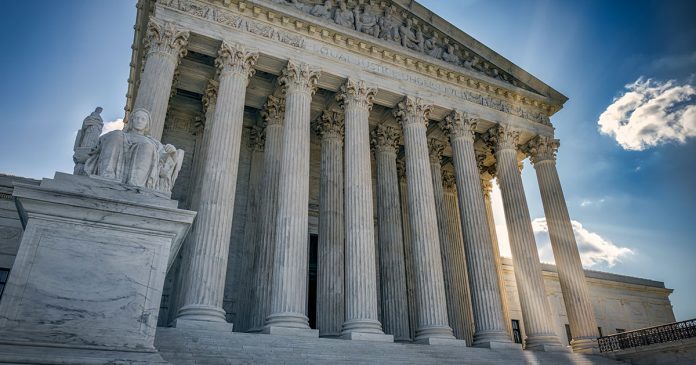

The United States Supreme Court is set to hear arguments in Jason Wolford, et al. v. Anne E. Lopez, Attorney General of Hawaii, a pivotal Second Amendment case addressing whether states can prohibit licensed individuals from carrying firearms on private property open to the public without explicit owner consent.
In a motion filed Monday, the U.S. Solicitor General requested leave to participate in the oral argument as amicus curiae and for the division of argument time. The Court has been asked to allocate 20 minutes to the petitioners, 10 minutes to the United States, and 30 minutes to the respondent, the Attorney General of Hawaii. Counsel for the petitioners has consented to this motion.
At the heart of the case is a Hawaii law that restricts lawful concealed-carry license holders from bringing firearms onto private property open to the public — such as businesses — unless the owner gives affirmative permission. The petitioners argue this infringes on the constitutional right to bear arms, while the state defends the law as a reasonable regulation.
The U.S. government, having supported certiorari at the petition stage, has now taken the position that Hawaii’s statute violates the Second Amendment. The Solicitor General’s brief contends that the law imposes an undue burden on the right to carry firearms in public for self-defense, a position aligning with the Court’s recent precedent in NYSRPA v. Bruen (2022), which emphasized the historical tradition standard for firearm regulations.
This motion cites the federal government’s prior participation in landmark Second Amendment cases — Heller, NYSRPA v. City of New York, and Bruen — and argues that its perspective will aid the Court in evaluating the constitutional questions involved.
The Court’s decision in this case could have far-reaching consequences for how states regulate the carrying of firearms in publicly accessible private spaces.
The Solicitor General’s decision to oppose the Hawaii law signals a significant moment in federal legal interpretation. It reinforces the view that the right to bear arms extends meaningfully beyond the home, especially when laws effectively turn most public spaces into gun-free zones by default. If the Court sides with the petitioners, it may further clarify limits on state power to impose restrictive carry laws post-Bruen.
Read the full article here