

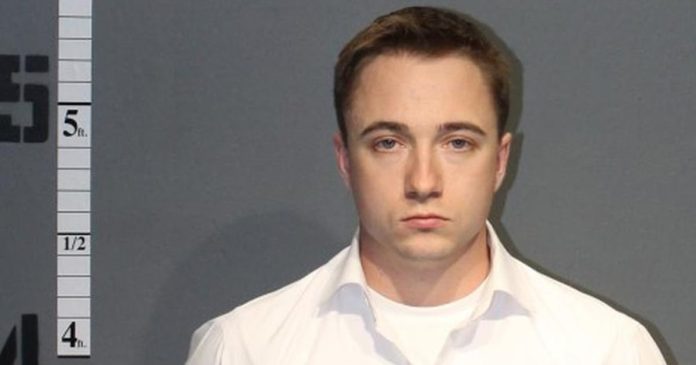

Key Takeaways
- The Second Amendment Foundation filed an amicus brief urging the Supreme Court to hear the case of Patrick Adamiak, who is serving 20 years in prison on firearm-related charges.
- Adamiak’s charges stemmed from demilled items and non-firing replicas, raising questions about the classification practices of the ATF.
- A confidential informant, who had charges of his own, played a role in Adamiak’s arrest and tried to get him to procure a machine gun, which Adamiak never did.
- There’s a grassroots campaign for a presidential pardon for Adamiak, highlighting the lack of functional evidence and no prior criminal record.
- The Adamiak case serves as a warning for gun owners regarding ambiguous ATF classification practices, showing how lawful items can be reclassified as illegal.
Estimated reading time: 7 minutes
WASHINGTON, DC — The Second Amendment Foundation has filed an amicus brief urging the U.S. Supreme Court to grant certiorari in the case of Patrick “Tate” Adamiak, the former active-duty U.S. Navy Master-at-Arms serving 20 years in federal prison on machine gun and destructive device charges that gun rights advocates have argued for years are based on demilled equipment, non-firing replicas, and unfinished parts that are still openly sold online today.
The case, Patrick Tate Adamiak, Petitioner v. United States, presents three questions to the Court, one of which is a Second Amendment challenge. The cert petition was filed on April 10, 2026, and is now under consideration by the justices.
Who Tate Adamiak Is
Adamiak enlisted in the U.S. Navy at age 17 and rose to E-6 Master-at-Arms, the Navy’s military police rating. He had received orders to report to Basic Underwater Demolition/SEAL training, an opportunity reserved for some of the most physically and mentally capable service members in the fleet. Instead of arriving at BUD/S, he is in a federal prison in New Jersey, with a scheduled release date of 2042.
According to extensive reporting by the Second Amendment Foundation’s Investigative Journalism Project, Adamiak operated a small online business called Black Dog Arsenal, where he sold roughly $10,000 a month in military gear and gun parts. He was one of GunBroker’s top 500 dealers. He had no prior criminal record.
The Charges and What Was Actually Recovered
Federal prosecutors charged Adamiak with possessing and transferring unregistered machine guns and possessing unregistered destructive devices. The government’s headline-grabbing announcement at the time of his June 2023 sentencing claimed he was “obtaining illegal machine guns” and that ATF agents had “recovered 25 additional unregistered firearms” during a search of his home.
A closer look at what was actually seized, as documented by SAF’s reporting, raises serious questions about every charge.
The “machine gun” possession charges were based on items that included a non-firing toy STEN submachine gun replica made by Spanish manufacturer Denix, which Adamiak had paid $75 for and which is still sold online today. They also included four 80 percent unfinished M240 side plates that were stripped pieces of cut steel, never assembled, and never finished. ATF’s expert witness, who was hired in November 2020 and testified at Adamiak’s trial as his first court appearance, classified those four plates as four machine guns.
The “destructive device” charges included two inert RPG tubes that had holes drilled into them and had been stripped of their internal parts. Adamiak had purchased one of them for $40 at a flea market while stationed in California. ATF examiners patched the hole, installed a trigger group from a real RPG, and test-fired a single training round to classify them as destructive devices. The judge who oversaw the trial wrote that Adamiak “did not possess all parts of destructive devices,” which by ordinary statutory standards should have ended the charges. The fake RPGs are still sold today without any FFL or paperwork required.
Other charges involved flare launchers, which are still sold today without any FFL or paperwork, and demilled MG42 kits that had been cut once with a saw rather than the three torch cuts ATF guidance has historically required. Adamiak purchased the MG42 kit through a Federal Firearms Licensee on GunBroker, assuming that an item being sold by a licensed dealer on a major firearms platform was legal to own.
Former senior ATF official Daniel G. O’Kelly testified at trial about the legal definition of firearm receivers under the Code of Federal Regulations and was credited with saving Adamiak from an additional 10-year sentence on a related charge involving 977 MAC receiver flats, which the prosecution had argued were 977 separate machine guns. O’Kelly testified that the flat pieces of stamped metal did not legally qualify as firearm receivers under federal law.
The Confidential Informant
The investigation that led to Adamiak’s arrest began with a confidential informant working off charges of his own. According to SAF’s reporting, the informant was a former machine gun shop owner who had been raided by ATF, charged with felon in possession, and was paid approximately $8,000 for his role in the Adamiak case alone. The informant repeatedly asked Adamiak to procure a machine gun for him over the course of months. Adamiak never did. He did sell the informant a shroud through GunBroker, along with various legal parts and components.
The Cert Petition and the SAF Amicus Brief
Adamiak’s cert petition was filed on April 10, 2026. The Second Amendment Foundation has now filed an amicus brief urging the Supreme Court to grant review. The case raises significant questions about the ATF’s classification practices, the boundaries of the National Firearms Act, and the application of Bruen and Heller to the regulation of firearm parts and components.
Cert petitions face long odds in any case. The Supreme Court receives thousands of petitions each year and grants only a small fraction. Building amicus support is one of the primary ways legal advocates signal to the Court that a case raises issues of broad national importance worth taking up.
The Pardon Push
Running parallel to the legal effort is a grassroots campaign asking President Trump to grant Adamiak a full presidential pardon. The campaign has been amplified by firearms commentators including Mike “Mrgunsngear” of the Mrgunsngear Channel, whose recent post on the case is embedded below.
The pardon argument rests on several key points. Adamiak had no prior criminal record. There were no victims associated with the case. None of the items cited as evidence were functional, complete, or operable as charged. Every item that formed the basis of his conviction is still legally available for purchase online today. No illegal weapons were recovered from his residence. The case appears to hinge on classification interpretations rather than any actual criminal conduct.
A presidential pardon would not vacate the conviction in the legal sense, but it would restore Adamiak’s rights, free him from prison, and send a clear signal that this kind of prosecution will not stand under the current administration.
More from USA Carry:
How Readers Can Help
For readers who want to support Adamiak’s case, the campaign has provided several points of contact.
To electronically contact the Acting Attorney General, readers can use the Department of Justice contact form at justice.gov/contact-us.
To mail letters, the campaign has provided two addresses:
Mr. David Warrington
White House Counsel
Office of White House Counsel
1600 Pennsylvania Avenue, NW
Washington, DC 20500
U.S. Department of Justice
Office of the Pardon Attorney
950 Pennsylvania Avenue NW
Washington DC 20530
The current U.S. Pardon Attorney is Ed Martin, who can be reached at [email protected].
A sample letter circulated by the campaign reads:
I am writing to respectfully request a full presidential pardon for Patrick 'Tate' Adamiak. Mr. Adamiak's case represents a profound miscarriage of justice that warrants immediate review and corrective action. He is a former active-duty U.S. Navy sailor who served his country honorably and had received orders to report to Basic Underwater Demolition/SEAL (BUD/S) training, an opportunity reserved for only the most capable and dedicated service members. Despite his exemplary record and commitment to service, Mr. Adamiak was investigated and prosecuted by the Bureau of Alcohol, Tobacco, Firearms and Explosives (ATF) under the prior administration. The circumstances of this case raise serious concerns: Mr. Adamiak had no prior criminal record. There were no victims associated with this case. None of the items cited as evidence were functional or complete. All items in question remain legally available for purchase online. No illegal weapons were recovered from his residence. This case appears to hinge on classification interpretations rather than any actual criminal conduct. The prosecution of a service member, absent criminal intent or harm, undermines confidence in the fairness and consistency of federal enforcement. Mr. Adamiak remains deeply patriotic and has expressed a continued desire to serve his country. His future, reputation, and opportunity to contribute have been unjustly taken from him. A presidential pardon would not only restore justice for Mr. Adamiak, but also send a clear message that fairness, proportionality, and common sense remain guiding principles of our legal system. I respectfully urge you to review this case and recommend clemency. Thank you for your time and consideration.Why This Case Matters for Gun Owners
The Second Amendment is a fundamental civil right, and the Adamiak case illustrates how a federal regulatory agency can convert ambiguous classification questions into 20-year prison sentences when prosecutors and ATF examiners are willing to push the boundaries of what counts as a firearm.
For everyday gun owners, parts builders, and collectors, this case is a warning. ATF’s reclassification practices have produced moving targets on items ranging from pistol braces to forced reset triggers to receiver flats. Items that were lawful when purchased can become unlawful by reinterpretation. Items that look like one thing on a website can be classified as something else entirely once an ATF examiner gets hold of them.
The case also fits into the broader regulatory reform context. The ATF has recently announced a 34-rule reform package under Executive Order 14206, Protecting Second Amendment Rights, which targets several of the most aggressive classification rulemakings of the previous administration. The Adamiak case is, in many ways, exactly the kind of outcome that reform package is designed to prevent going forward. The question is what happens to the people already serving prison time under the old framework.
Read the full article here