

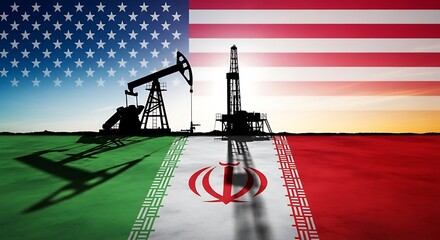

If you think the cost of putting fuel in your car is high now, just wait. It isn’t over yet. Seventy-five energy assets in the Gulf have been damaged in attacks during the United States-Iran war.
International Energy Agency (IEA) Executive Director Fatih Birol was interviewed by the French newspaper Le Figaro on Tuesday and warned that the Gulf energy shock “is more severe than those of 1973, 1979, and 2022 combined.” Birol insisted that this was a bigger deal because it’s affecting oil, gas, food, fertilizers, petrochemicals, helium, and global trade all at once.
Simulation: Extended Strait of Hormuz Closure Could Affect $1.2 Trillion in Global Trade
According to a report by ZeroHedge, Birol said in the interview that more than 75 energy sites across the Gulf region have been attacked, with about a third severely damaged. This suggests that tens of billions of dollars in repairs and a prolonged disruption of some energy flows, further tightening global supplies and compounding the disruption at the Strait of Hormuz chokepoint.
When Birol was asked how quickly the Middle East could possibly recover from this damage, he said:
“We are monitoring energy infrastructure in real time—fields, refineries, terminals. Seventy-five facilities have been attacked and damaged, more than a third severely. Repairs will take a long time. Countries like Saudi Arabia may recover faster due to strong engineering capabilities and financial resources, but elsewhere, such as Iraq, the situation is far worse. About 15 million people depend on oil and gas revenues there, and the country has lost two-thirds of its oil income, approaching economic paralysis. It will take a long time for the Middle East—previously a reliable energy hub—to recover.” -Birol, as reported by Le Figaro
The global economy is set to be hit hard by this war/energy crisis. “The global economy will suffer. Of course, European countries will struggle, as will Japan, Australia, and others. But developing countries will be the most affected due to high oil, gas, and food prices, and accelerating inflation,” Birol said. “Their economic growth will be heavily impacted. I fear many developing countries will see their external debt rise significantly. That is why I am pessimistic—this crisis stems not from energy itself, but from geopolitics.”
Is Trump Unleashing a War for Oil?
Read the full article here